The share of government procurement awards going to businesses owned by persons with disabilities has increased nationally from 9.84% to 14.38%, but their participation remains below the level needed to translate Kenya’s inclusion commitments into meaningful economic opportunities.
At the same time, persons with disabilities accounted for just 1.28% of the workforce in seven public institutions that provided employment data, against the statutory 5% requirement, according to a new gap analysis disseminated today in Nairobi.

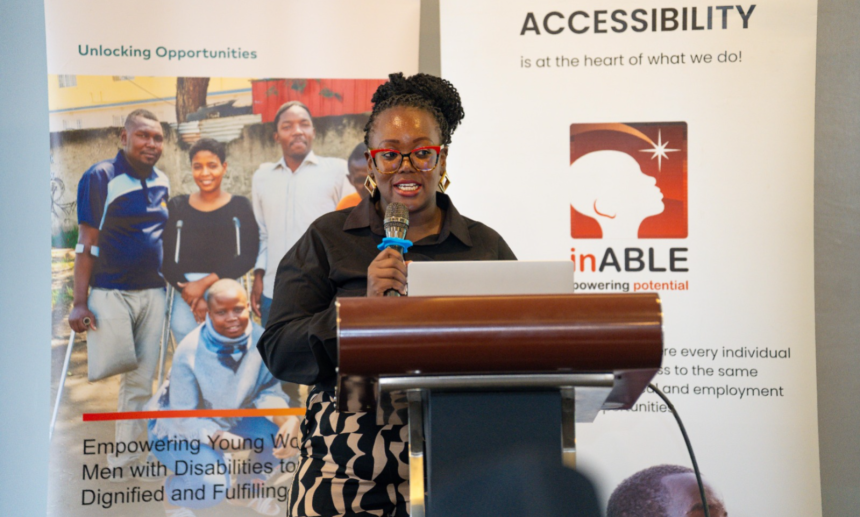
The findings were presented during a high-level meeting convened by the Unlocking Opportunities Programme (UOP) in partnership with Mastercard Foundation, bringing together government representatives, development partners, private sector leaders and organisations of persons with disabilities to examine the implementation of the Access to Government Procurement Opportunities (AGPO) framework and disability-inclusive employment requirements.
The assessment covered 42 institutions across Embu, Kilifi, Kisumu, Nairobi, Nakuru and Turkana, examining institutional policies, systems and practices, as well as the experiences of persons with disabilities seeking procurement and meaningful and dignified employment opportunities.
Kenya’s AGPO framework reserves 30% of government procurement opportunities for enterprises owned by women, youth and persons with disabilities.
Separately, the Persons with Disabilities Act, 2025 requires employers with 20 or more employees to reserve at least 5% of positions for persons with disabilities and provide reasonable accommodation.
While the study identifies progress in implementing these commitments, it points to gaps in institutional accountability, accessible information, financial inclusion and enforcement that continue to limit participation.
Procurement participation is growing, but barriers persist the assessment found that the value of contracts awarded to businesses owned by persons with disabilities in the sampled counties increased from Ksh 46.37 million in the 2024/25 financial year to Ksh 95.46 million in 2025/26.
Their share of AGPO awards in these counties also rose from 4% to 15.1%. Nationally, data cited in the report show that the share of AGPO awards going to these businesses increased from 9.84% to 14.38%.
However, their average share over the past five years stands at approximately 10.4%, indicating that greater effort is needed to ensure that reserved procurement opportunities translate into sustained business growth.
The report identifies inaccessible tender information and digital procurement platforms as significant barriers, particularly for suppliers who are blind or have low vision. Limited awareness of available opportunities, complex tendering requirements and inadequate access to finance also affect the ability of businesses owned by persons with disabilities to compete.
Delayed payments emerged as another major challenge, with timely payment scoring only 40% in the institutional assessment. For small enterprises, delays can undermine cash flow, limit their ability to fulfil contracts and prevent them from participating in subsequent tenders.
The study also highlights weaknesses in disability-disaggregated procurement data, making it difficult to establish how much of the reserved procurement allocation actually reaches businesses owned by persons with disabilities.
Employment representation remains below the statutory threshold on employment, reported workforce data from seven public institutions showed that 371 of approximately 29,011 employees were persons with disabilities, representing 1.28% of the workforce.
Of the ten public institutions assessed, three reported meeting the 5% requirement, four did not, while three could not confirm their compliance because the necessary workforce data was unavailable.
The report cautions that the figures were institutionally reported and had not been independently verified against complete human resource records. Beyond representation, the assessment found gaps in accessible recruitment systems, workplace accommodation and career progression.
Budgetary provision for reasonable accommodation scored 36.7%, while accessibility of digital systems and communication scored 33.3%.
The findings point to the need for employers to move beyond recruitment targets and invest in accessible workplaces, assistive technologies, reasonable accommodation and opportunities for retention, promotion and leadership.
Turning findings into practical action
The report recommends improving access to procurement information and digital platforms, strengthening supplier development and access to finance, ensuring timely payments and introducing stronger systems for tracking awards to businesses owned by persons with disabilities.
For employment, it calls for institutions to align human resource policies and recruitment practices with the Persons with Disabilities Act, 2025, strengthen awareness among employers and HR practitioners, and provide dedicated budgets for reasonable accommodation and workplace accessibility.
Speaking at the meeting, Senator Isaac Mwaura, Head of the Office of Diversity, Inclusion and Disability Rights in the Executive Office of the President, called for a shift from treating inclusion as a compliance exercise to recognising its contribution to economic growth and institutional performance.
“A business owned by a person with a disability can deliver quality, innovation and value just like any other enterprise,” said Senator Mwaura.
He added that employees with disabilities bring unique perspectives and lived experiences that enrich workplaces and strengthen team performance.
He urged public institutions and employers to translate policy commitments into measurable results and ensure that persons with disabilities participate meaningfully in decisions that affect their lives.
Charles Warria, Programmes Director at inABLE, speaking on behalf of the Unlocking Opportunities Programme, said the assessment was intended to identify where implementation was falling short and inform practical action by public and private sector institutions. “Kenya has done the hard work of writing strong laws.
Our task now is to make them real for the people they were written for,” He noted that the programme would work with public and private institutions to strengthen their capacity to implement the procurement and employment commitments, including through practical guidance, capacity building and tools to support implementation.
The Public Procurement Regulatory Authority (PPRA), represented at the meeting by Eannes Ongus, Deputy Director for Resource Mobilisation and Partnerships, reaffirmed the Authority’s role in monitoring compliance with the reserved procurement scheme.
He noted that while public procuring entities were making reservations under AGPO, the challenge remained in translating these reservations into actual contract awards.
Ongus also highlighted barriers relating to access to information, internet connectivity and the capacity of businesses to navigate the e-government procurement system. He said the Authority would continue strengthening compliance monitoring and improving access to its services.
The Unlocking Opportunities Programme is implemented by Humanity and Inclusion in partnership with inABLE, Next Step Foundation and Riziki Source, with funding from the Mastercard Foundation under its Young Africa Works Strategy.
The programme seeks to expand access to dignified and fulfilling work for young women and men with disabilities in Kenya through skills development, entrepreneurship and employment pathways, while strengthening the broader enabling environment for economic inclusion.
The programme will use the findings to support public institutions and employers in addressing identified gaps, strengthening implementation capacity and promoting practical solutions that expand access to procurement and employment opportunities for persons with disabilities.